
 Available in US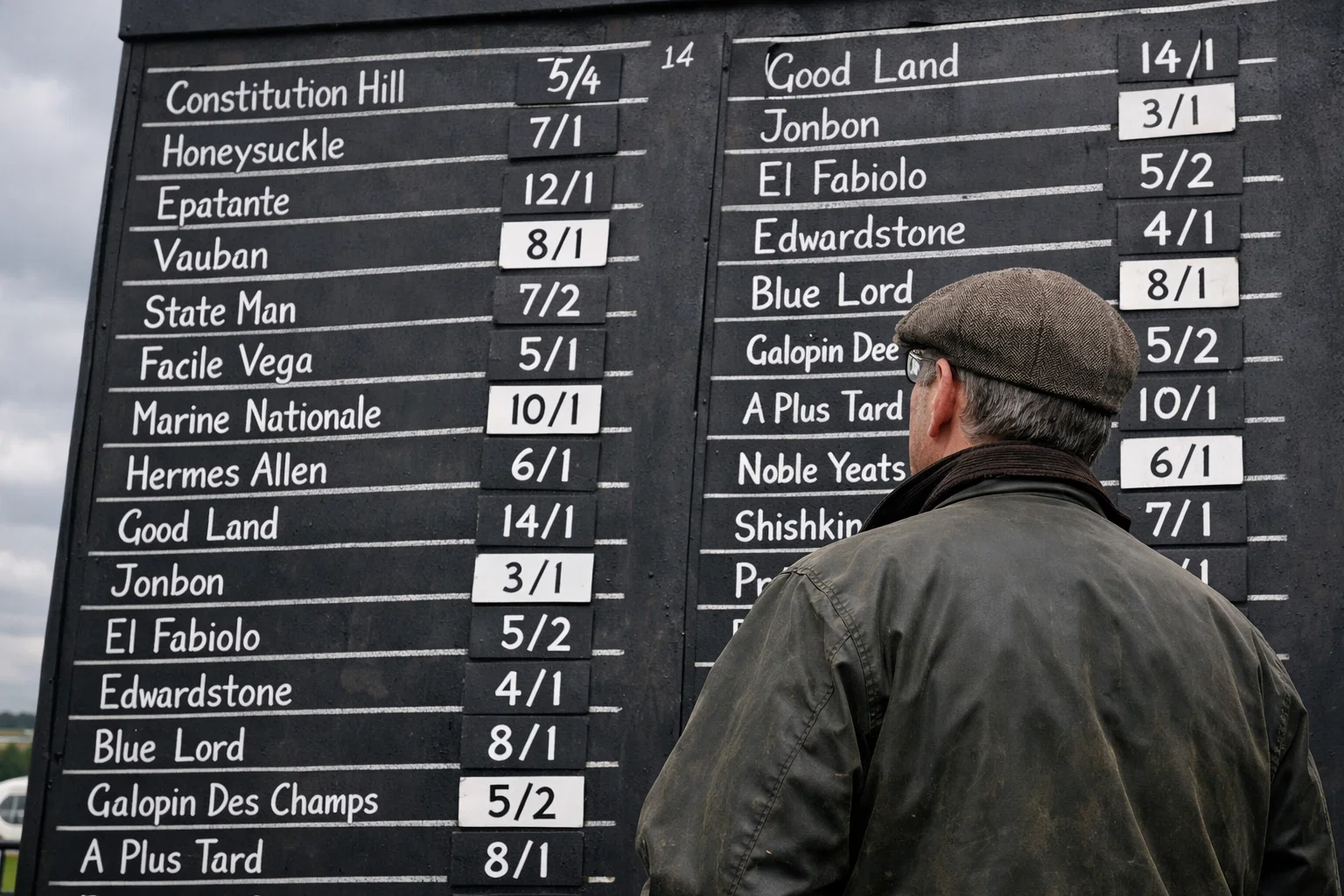
Ante-post betting is one of the oldest deals in racing: place your money early, get bigger odds, and accept that if your horse doesn’t make it to the start line, you lose the lot. It sounds archaic in an era of instant refunds and Non-Runner No Bet promotions, but the principle hasn’t changed. When you bet ante-post and the horse is withdrawn, the bookmaker keeps your stake. No partial refund. No Rule 4 adjustment. Just silence where your money used to be.
For many punters, ante-post markets are where the real value lives — especially in the weeks before major festivals when prices are longest and the market is still forming. But the risk walks on four legs. Injury, illness, going changes, or a simple change of plan by the trainer can turn a shrewd ante-post selection into a dead slip. Understanding exactly when and why your money is at risk is the starting point for deciding whether those longer odds are worth the exposure.
Ante-Post Betting and Non-Runners — More on this topic at horse racing non runners.
What Makes a Bet Ante-Post?
A bet is ante-post when it’s placed before the final declarations for a race have been made. The exact cut-off varies by bookmaker, but the general principle is consistent: if the market is labelled “ante-post” (or sometimes “early price” or “future” depending on the platform), your bet carries the full withdrawal risk. Once final declarations are confirmed — typically 24 or 48 hours before the race — most bookmakers switch to day-of-race pricing, and from that point the standard non-runner refund rules apply.
The ante-post window can be enormous. Markets for the Cheltenham Festival open months in advance, with prices available from the autumn for races the following March. The Gold Cup, Champion Hurdle, and Champion Chase all attract substantial ante-post activity from October onwards. With total prize money at the 2025 Cheltenham Festival reaching £4.93 million, the stakes are high enough to justify early positions — but also high enough to make a non-runner sting badly.
What separates ante-post from an early day-of-race price is the contractual relationship. When you bet ante-post, you’re accepting a price that factors in the possibility of withdrawal. The bookmaker is offering longer odds precisely because there’s a chance the horse won’t run and they’ll keep the stake without needing to pay out. It’s risk pricing in its purest form. The punter gets a better number; the bookmaker gets the withdrawal premium. Both sides know the rules going in.
Some bookmakers close their ante-post markets the night before the race; others maintain them until the morning of raceday. The key moment is final declarations — once the BHA confirms the runners, any bet placed on a declared horse typically shifts to day-of-race terms. But any bet placed before that confirmation remains ante-post, even if the horse subsequently declares. The timestamp of your bet, not the timing of the declaration, determines which rules apply.
Why Bookmakers Don’t Refund Ante-Post Non-Runners
The no-refund rule on ante-post non-runners isn’t a quirk or a gotcha — it’s the foundational trade-off of the market. Bookmakers price ante-post runners at longer odds specifically because they’re absorbing less risk than they would on a day-of-race bet. If they had to refund ante-post stakes on every non-runner, those longer odds would vanish overnight. The prices would simply converge with day-of-race markets, and the ante-post concept would be meaningless.
The scale of potential losses became painfully clear at Cheltenham 2024. Trainer Nicky Henderson was forced to withdraw seven or more horses from the Festival — including headline entries for the Champion Chase and Gold Cup — after an unidentified illness swept through his Seven Barrows stable. According to estimates reported by Horse & Hound, Henderson’s potential losses in prize money alone were approximately £1.3 million. For the thousands of punters who had backed those horses ante-post over the preceding months, the outcome was the same: stakes lost, no recourse, no compensation.
That case illustrates why ante-post risk isn’t abstract. Stable illness can’t be predicted. It doesn’t follow a pattern that form study can identify. Neither can the transport failures, going changes, or veterinary findings that account for other ante-post non-runners. When you back a horse at 8/1 in December for a March race, you’re not just betting on the horse’s ability — you’re betting on four months of uneventful health, logistics, and ground conditions. Any break in that chain costs you the stake.
From the bookmaker’s perspective, the maths is unambiguous. Ante-post liabilities are priced with the withdrawal possibility included. The book is balanced on the assumption that a proportion of stakes will be forfeited through non-runners. Removing that assumption would require repricing the entire market — and the new prices would be shorter, eliminating the value that draws punters to ante-post in the first place.
Exceptions: NRNB, Market Suspensions, and Void Races
The no-refund rule is the default, but it’s not without exceptions — some contractual, some situational.
The most significant is Non-Runner No Bet. When a bookmaker offers NRNB on an ante-post market, they’re essentially waiving the withdrawal forfeiture. If your horse doesn’t run, your stake is returned. This is a promotional tool, not a regulatory requirement — bookmakers choose to offer it, typically on high-profile races at major festivals, and they set the terms. NRNB markets almost always offer shorter odds than the standard ante-post price, because the bookmaker is now carrying the withdrawal risk that would normally sit with you. The price difference is the cost of insurance.
Market suspensions are another exception, though they’re rarer. If a bookmaker suspends an ante-post market for reasons unrelated to individual runners — for instance, if a race is moved to a different date or a fixture is abandoned entirely — they may void all bets and return stakes. This is typically at the bookmaker’s discretion and covered by their general terms and conditions. It’s not automatic, and it doesn’t apply when a single horse is withdrawn while the rest of the field remains intact.
Void races trigger refunds across the board. If a race doesn’t take place at all — because the meeting is abandoned due to weather, for example — ante-post bets are voided and stakes returned. This is a universal rule, not an exception to the ante-post principle, because the race itself has ceased to exist. No race means no bet, regardless of when the wager was placed.
On the Betfair Exchange, ante-post markets have their own dynamics. If a horse is withdrawn from an exchange ante-post market, matched bets on that horse are voided. But the reduction factor isn’t applied to ante-post markets in the same way it is to day-of-race markets. Exchange ante-post is arguably cleaner from a refund perspective — your bet on the withdrawn horse is void, full stop — but you also don’t get the longer bookmaker odds that come with the withdrawal premium.
Weigh the Value Against the Risk
Ante-post betting is a calculated gamble inside the gamble. The odds are better because you’re accepting a risk that day-of-race punters don’t carry. Whether that trade-off makes sense depends on the specific market, the specific horse, and your tolerance for seeing a stake evaporate because of something entirely outside your control.
The practical framework is straightforward. If you’re confident in the horse’s health, the trainer’s intent, and the likely ground conditions, the longer ante-post odds can represent genuine value. If you’re uncertain on any of those fronts, look for NRNB markets as a hedge — accepting shorter odds in exchange for the safety net. And if neither option satisfies you, wait for final declarations and bet day-of-race, knowing that a non-runner simply means your money comes back. Ante-post odds are better — but the risk walks on four legs, and legs can go wrong at any time.
See also Non-Runner No Bet Cheltenham 2026.
