
 Available in US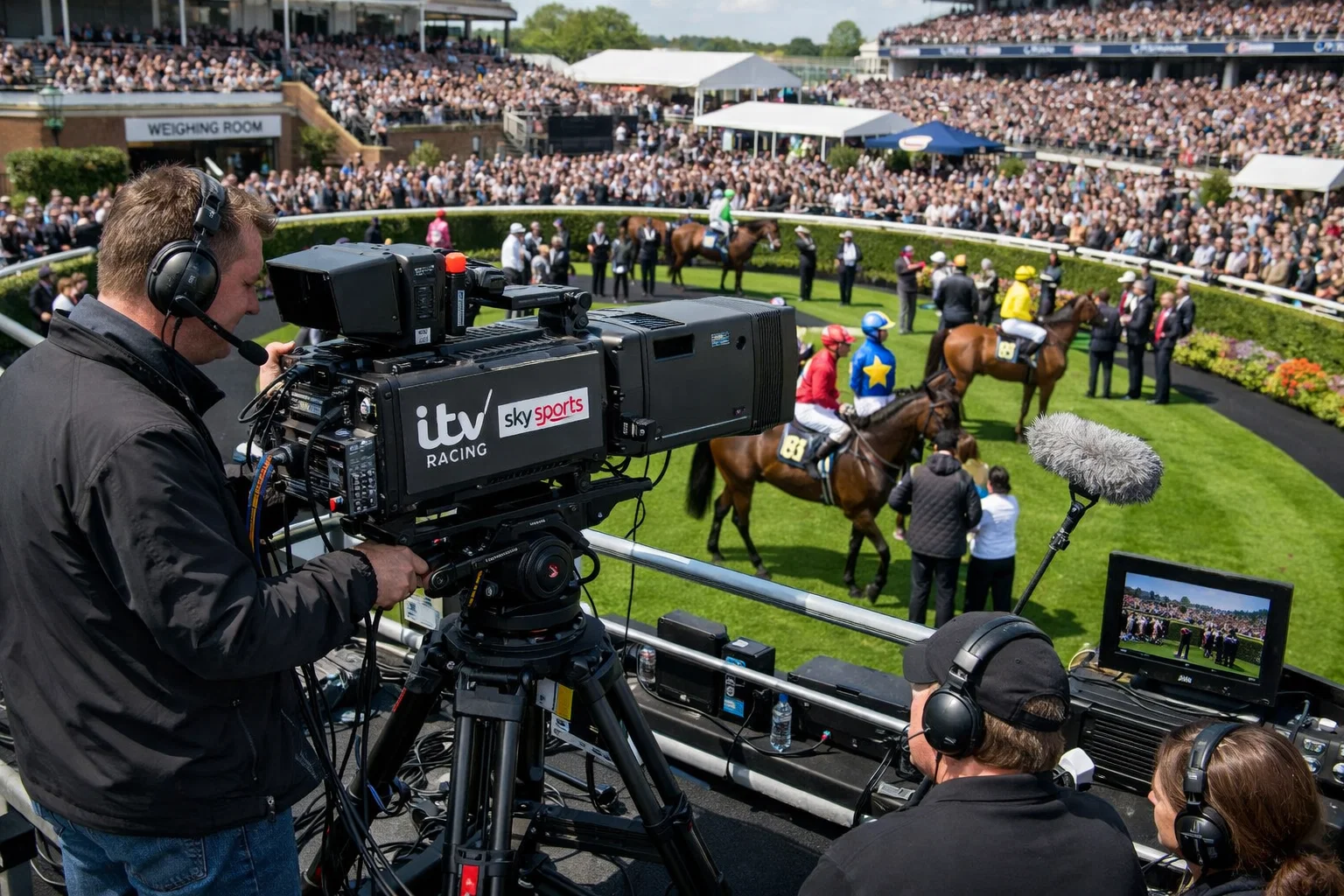
Saturday afternoon racing on ITV is the shop window for British racing. The cameras, the presenters, the betting tips — it’s where the sport reaches its widest audience and where the most money flows through the market. UK racecourse attendance exceeded 5 million in 2025 for the first time since 2019, according to the BHA’s 2025 Racing Report, and a significant share of those racegoers — and the vastly larger television audience — encounter racing through ITV’s flagship broadcast. But the cameras don’t change the non-runners — the card quality does.
Televised race days are Premier fixtures. They feature better racing, bigger fields, stronger competition, and higher prize money than the average midweek card. That quality distinction has direct consequences for non-runner patterns, and understanding those consequences helps punters who bet primarily on broadcast days navigate the specific dynamics they’ll encounter.
Non-Runners on ITV Racing and Sky Sports Racing Days — More on this topic at horse racing non runners.
Do Televised Cards See Fewer Non-Runners?
The short answer is: proportionally, yes — and the reason is field size.
ITV Racing days are classified as Premier fixtures in the BHA’s fixture hierarchy. On Premier Flat days in 2025, average field sizes reached 11.02 runners per race, compared with 8.65 on Core fixtures. Over Jumps, Premier days averaged 9.41 against a Core figure of 7.63. These larger fields exist because Premier fixtures carry higher prize money, which attracts more entries from trainers who reserve their best horses for the most valuable opportunities.
Larger fields absorb non-runners more comfortably. If a 12-runner Premier handicap loses one horse to withdrawal, the race retains its competitive character — the remaining eleven runners still produce a meaningful contest. On a Core card where the same race type attracts eight runners, losing one drops the field to seven and changes the race’s character more noticeably. The non-runner rate per race may be similar across both fixture types, but the impact of each individual withdrawal is lower on Premier days because the starting fields are deeper.
There’s also a behavioural factor. Trainers are more committed to running at Premier fixtures because the rewards are higher. A horse with a minor niggle might be withdrawn from a Tuesday card at a minor track, where the prize money doesn’t justify the risk. The same horse, entered in a Saturday ITV feature worth ten times as much, is more likely to be given the benefit of the doubt. This doesn’t mean trainers compromise welfare for broadcast days — but it does mean the threshold for withdrawal is marginally higher when the stakes are larger.
The result is that ITV broadcast days tend to deliver more complete racecards than the average meeting. Non-runners still occur — going changes, illness, and veterinary issues don’t respect the broadcast schedule — but the combination of larger fields and higher trainer commitment means the races you watch on Saturday afternoon are generally more resilient to withdrawals than the races you’d find at a quiet Wednesday meeting.
How to Track Non-Runners on Broadcast Days
ITV Racing’s pre-show coverage typically begins around 1:00pm on Saturdays, and the presenters will mention notable non-runners as part of their analysis. But relying on the broadcast for NR information is too slow for betting purposes — by the time the presenter mentions a withdrawal, the market has already adjusted.
The most efficient source for raceday non-runners is the Racing Admin feed that drives racecard updates on major platforms. Bookmaker apps, the Racing Post site, and the AtTheRaces service all pull from this feed, and non-runner notifications appear within minutes of the trainer’s submission. Checking your preferred platform between 8:00am and 10:00am on a Saturday morning will capture the bulk of going-related withdrawals. A second check about an hour before each televised race catches any late raceday decisions.
For ITV Racing specifically, the broadcast schedule itself is useful context. ITV typically covers six or seven races across its Saturday afternoon slot, and the races are selected months in advance to ensure high-quality cards. The broadcast selection process favours races with large entries and competitive fields, which means the races you’re watching — and betting on — are drawn from the strongest part of the card. Non-runners in these races are less likely than in the supporting card races that Sky Sports Racing or Racing TV might cover.
Sky Sports Racing provides near-continuous coverage of British and Irish racing on a dedicated channel. The non-runner dynamics on Sky Sports days are closer to the Core fixture average, because the channel covers a broader range of meetings, including midweek cards and smaller tracks. The NR monitoring approach is the same — check the racecard feeds in the morning and again before each race — but the probability of encountering non-runners is higher on the less prominent meetings that make up the bulk of Sky’s schedule.
The ITV7 Bet and Non-Runners: Special Considerations
ITV’s promotional competition, the ITV7, invites viewers to pick the winner of seven televised races for a chance to win a jackpot prize. It’s a free-to-enter accumulator-style game, and non-runners interact with it in a specific way.
If one of your ITV7 selections is a non-runner, the standard approach is to replace it with the starting favourite in that race. The game is promotional rather than a formal bet, so the rules are set by ITV and its partners rather than by bookmaker regulations. This replacement mechanism means that non-runners in the ITV7 don’t void your entry — they redirect it to the favourite, which may or may not be the horse you would have chosen.
For punters who treat the ITV7 as a serious exercise (and many do, given that the jackpot can reach five or six figures), non-runners create a strategic wrinkle. If one of your carefully selected picks is replaced by the favourite — which everyone else in the competition also inherits — the differentiating value of your selection is lost. The non-runner turns your unique pick into a consensus pick, reducing your edge in a competition where having different selections from the crowd is part of the strategy.
More broadly, the ITV7 introduces many casual viewers to the concept of non-runners for the first time. A viewer who picks seven horses on a Saturday morning and then discovers that one has been replaced by the favourite learns a practical lesson about the reality of racing: the declared field isn’t the final field, and non-runners are a routine part of the sport. It’s a small but meaningful entry point for understanding why NR awareness matters.
Broadcast Days Are Premier Days — And That Affects NR
The connection between broadcast and non-runners isn’t direct — ITV doesn’t prevent or cause withdrawals. But the card quality, field sizes, and trainer commitment that characterise broadcast days produce a non-runner environment that’s measurably different from the average meeting. The cameras don’t change the non-runners — but the card quality does. If your betting is concentrated on ITV Saturdays and major festival broadcasts, you’re operating in a segment of the sport where non-runners have less impact per occurrence than they do on the broader fixture list. That’s not a reason to ignore them — but it is a reason to calibrate your expectations accordingly.
See also Can a Horse Become a Non-Runner After the Race Starts?.
