
 Available in US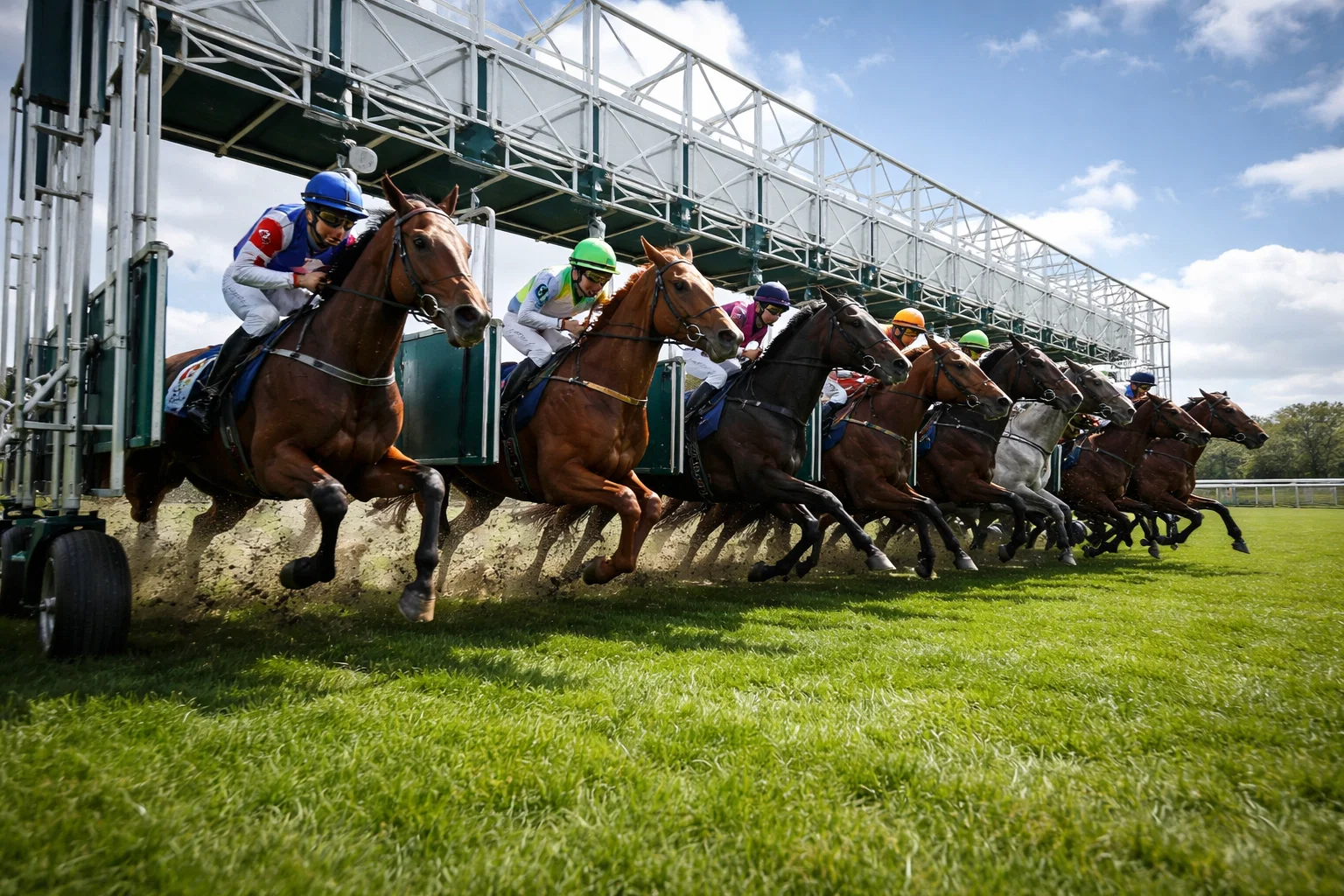
For decades, the dividing line in horse racing was absolute: if the stalls opened or the tape went up, your horse was a runner. It didn’t matter if the stall jammed, if the horse was left behind, or if a tape malfunction denied it any chance of competing. Once the race started, your bet stood. If the horse didn’t finish, you lost — even if it never had a fair chance to begin.
That changed in 2024. The BHA introduced what’s become known as the fair start rule — a provision that empowers stewards to retrospectively declare a horse a non-runner if it was denied a fair start due to circumstances beyond its own or its rider’s control. The start isn’t always fair — and now the rules account for that. For punters, this is one of the most significant rule changes in recent memory, because it creates a mechanism for refunds in situations that previously meant an automatic loss.
The Fair Start Rule — More on this topic at horse racing non runners.
What the Fair Start Rule Actually Says
The fair start rule was introduced by the BHA in May 2024, initially applying to Flat races that start from stalls. The core provision is straightforward: if stewards determine that a horse was denied a fair start due to circumstances outside the horse’s or jockey’s control, they can declare that horse a non-runner — even though the race has already begun.
The circumstances covered are specific. A stall that fails to open properly, trapping the horse while the rest of the field breaks cleanly. A mechanical fault in the starting equipment. An incident in an adjacent stall that physically prevents a horse from leaving. These are the kinds of situations the rule targets — not cases where a horse hesitates, rears, or refuses to jump, but cases where the starting infrastructure fails the horse.
The distinction is crucial. If a horse is left in the stalls because it reared up and missed the break, that’s the horse’s behaviour — and the rule doesn’t apply. If a horse is left in the stalls because the stall gate didn’t open, that’s an equipment failure — and the rule does apply. The stewards make the determination in real time, reviewing footage and consulting with the starter and stalls handlers before reaching a decision.
When a horse is declared a non-runner under the fair start rule, the betting consequences follow the standard non-runner protocol. All bets on that horse are voided and stakes returned. Rule 4 deductions may be applied to the remaining runners. The horse is officially recorded as a non-runner, not as a non-finisher or a faller, which triggers the refund mechanism across all bookmakers and exchange platforms.
The rule was extended to tape-start Jump races from 1 October 2025, closing a gap that had been apparent since the original Flat provision was introduced. Tape starts are used in National Hunt racing and bring their own set of problems: a horse can be tangled in the tape, impeded by another runner at the start, or simply denied a clear break when the tape rises unevenly. The extension ensures that the fair start principle applies regardless of the starting method.
Stalls Races (May 2024) vs Tape-Start Races (October 2025)
The stalls version of the rule and the tape-start version share the same principle but apply in different contexts, each with its own complications.
In stalls races, the most common scenario is a mechanical failure. Starting stalls are complex pieces of equipment — gates that must open simultaneously across a dozen or more individual compartments. When one stall malfunctions, the horse inside can be left stationary while the rest of the field sprints away. Before May 2024, that horse was considered a runner who failed to compete. Now, stewards can review the footage, confirm the mechanical fault, and declare the horse a non-runner. The jockey’s actions are also assessed: if the rider could reasonably have encouraged the horse to break despite the issue, the fair start provision may not apply.
Tape-start races present different challenges. The starting tape is raised by the starter, and the field breaks in a less controlled manner than from stalls. Horses can be caught on the wrong side of the tape, tangled in it as it rises, or impeded by another runner that stumbles at the start. The BHA’s extension to Jump races acknowledged that these incidents — particularly tape-related malfunctions — can deny a horse a fair opportunity to compete just as effectively as a stuck stall gate.
The key difference in practice is frequency. Stalls malfunctions, while not common, are more mechanically defined — the gate either opened or it didn’t. Tape-start incidents involve more subjective judgement from the stewards, because the tape mechanism is simpler and the causes of a poor start are more varied. A horse that breaks slowly from a tape start because it was slightly behind the line is different from a horse that was physically impeded by a tangled tape. The stewards must distinguish between the two, and the threshold for invoking the fair start rule in tape races is correspondingly more nuanced.
How Often Has It Been Used?
Since its introduction for stalls races in May 2024, the fair start rule has been invoked approximately half a dozen times. That low frequency is by design — the rule was never intended as a routine mechanism. It’s a safety net for exceptional circumstances, and the BHA expected from the outset that it would be used sparingly.
The case that best illustrates why the rule was needed predates its introduction. The Epsom Dash — a five-furlong sprint at the Derby meeting — has historically been one of the most chaotic starts in British racing, with large fields and narrow stalls creating frequent problems. As BHA Chief Regulatory Officer Brant Dunshea explained when announcing the rule, the provision would empower stewards to declare horses that were unable to start on equal terms as non-runners, ensuring that punters who backed those runners could receive a refund. The Epsom Dash scenario — where several horses were effectively denied a start through no fault of their own — was the catalyst for the change.
The rarity of use is actually a positive signal for punters. It means that starting equipment in British racing is generally reliable, that tape starts are usually clean, and that the situations requiring stewards’ intervention are genuinely exceptional. But when those situations do arise, the rule provides a mechanism that previously didn’t exist. Before May 2024, a horse trapped in a stall was a loser. Now, it may be declared a non-runner, and your stake comes back.
One practical consideration: the declaration happens after the race, which means you won’t know during the race itself whether the fair start rule will be applied. The stewards review the footage post-race (or sometimes during the race), make their determination, and then announce the non-runner declaration. If your horse was clearly left in the stalls, don’t assume the worst immediately — wait for the stewards’ decision, because the refund may follow.
A Safety Net for Punters and Horses
The fair start rule is a small but meaningful reform. It corrects an injustice that had existed for as long as starting stalls and tapes have been used in British racing — the idea that a horse could be physically prevented from competing and still count as a runner for betting purposes. The start isn’t always fair — and now the rules account for that. For punters, it means one fewer scenario where a refund is denied for reasons that have nothing to do with the horse’s ability or the jockey’s skill. The rule won’t come up often. When it does, you’ll be glad it’s there.
See also Trainer Non-Runner Rates.
